


Most home break-ins aren’t sophisticated. Burglars are not, as a rule, patient strategists casing homes for weeks. They’re opportunists. They’re looking for the house on the street that looks easiest — the one with the unlocked gate, the stack of mail, the dark side path, the old lock on the back sliding door.
The good news is that most of what makes a home a target is fixable. And a lot of it doesn’t cost anything.
This guide is structured as a proper audit. First, walk your property and know what you’re looking at. Then we’ll cover three tiers of improvement: things that are free, things that are cheap, and things worth investing in properly. Security screens and doors come into that last section — but there’s a lot of ground to cover before we get there.
What the Numbers Tell Us
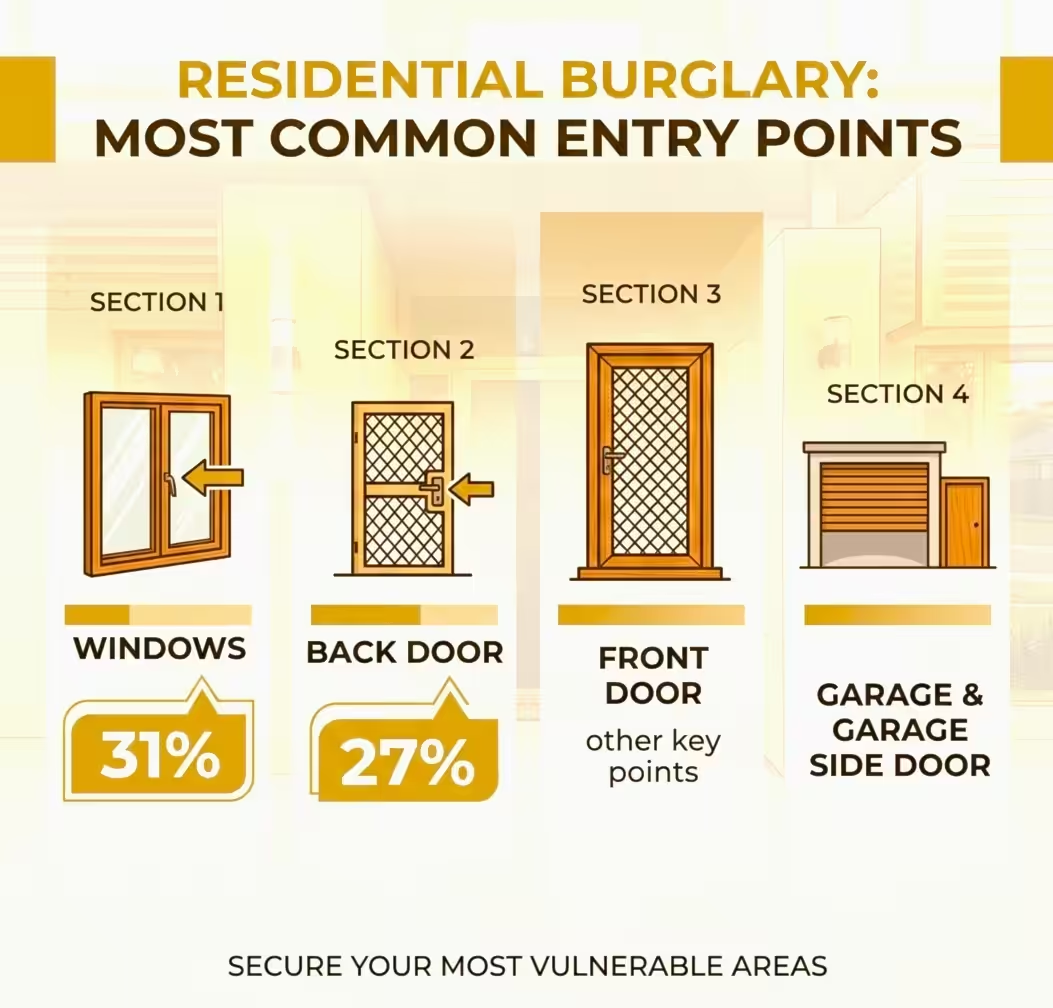
Around 185,000 Australian households experienced a break-in or attempted break-in in the 2022-23 financial year. In roughly 75% of cases, the intruder was inside and gone within five minutes — in and out before most people would even notice something was wrong.
The most common entry points in Australia, according to survey data, are windows (31%) and back doors (27%), followed by front doors and garages. Perhaps the most sobering finding: more than half of those break-ins involved either an unlocked entry point or a lock that was straightforward to defeat.
Most Australian break-ins take less than five minutes. The homes targeted are overwhelmingly those that look like the easiest option on the street.
The implication is clear: home security isn’t primarily about being impenetrable. It’s about not being the easiest target. Every layer of security you add — even a simple habit — shifts the calculus for an opportunist looking for the path of least resistance.
Part One: The Security Audit — Walk Your Own Property
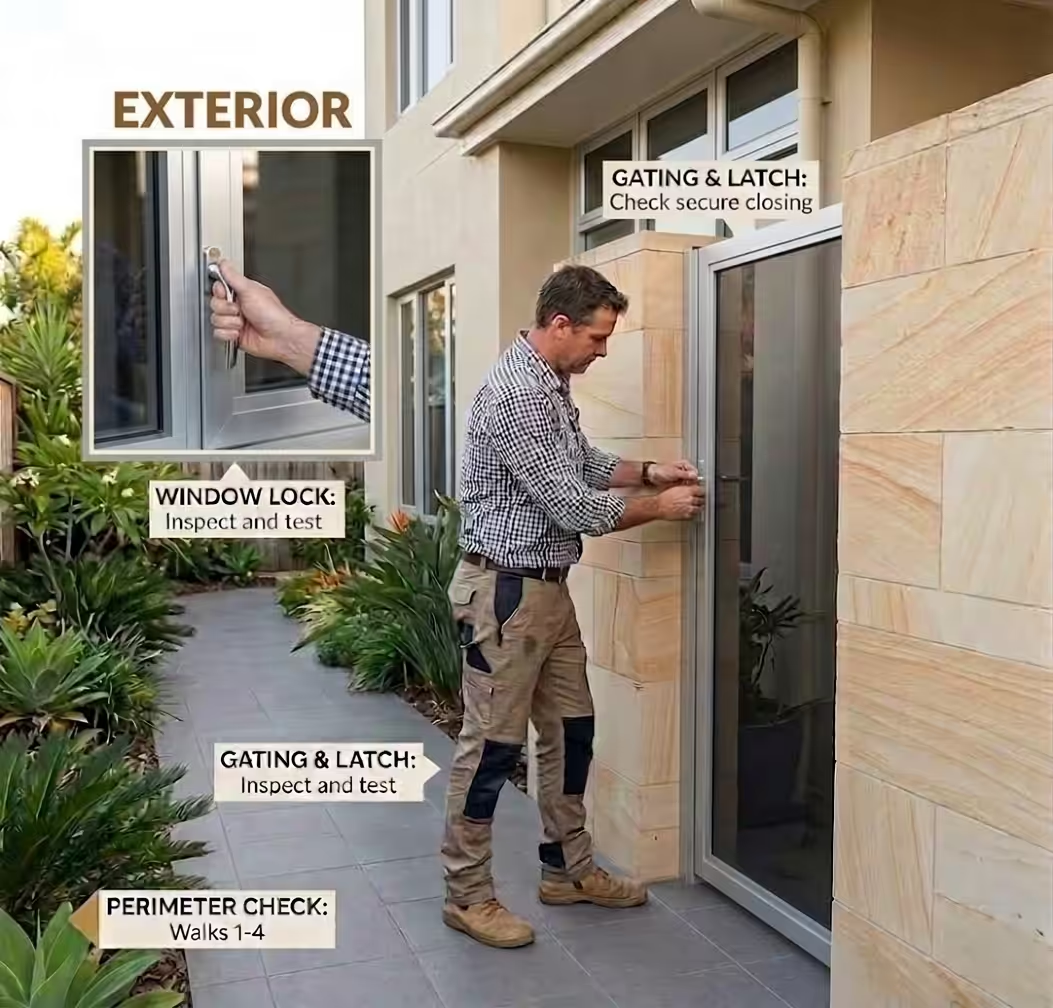
Before doing anything else, walk your home the way an opportunist would. Go outside. Look at each access point. Ask yourself: if I didn’t have a key and I wanted to get in quietly, where would I try first?
Use this checklist.
Front of Property
- Front door lock Is it a quality deadbolt or a standard handle lock? Handle locks alone offer minimal resistance.
- Front door condition Does the door fit solidly in its frame? Gaps or warping reduce the effectiveness of even a good lock.
- Screen or security door Is there a screen door providing a secondary barrier? Is it locked as a habit, not just when you remember?
- Visibility from the street Can a person approach the front door without being clearly visible? Overgrown hedges and covered entries create cover.
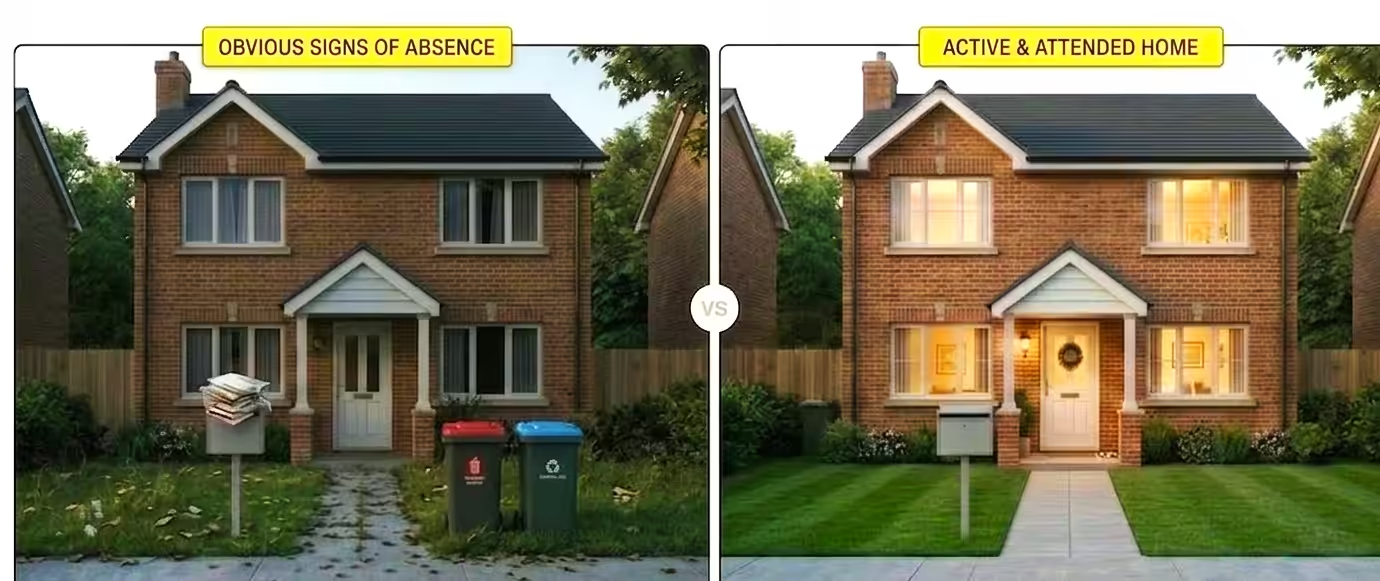
- Letterbox and mail Is mail accumulating? A full letterbox is a reliable indicator of absence.
- Lighting Is the front entry well lit at night? Is the lighting motion-activated or timer-controlled, or does it require manual switching on?
- Key hiding spots Under the mat, under a pot plant, in the letterbox — these are the first places anyone checks. If you have a spare key outside, reconsider.
Back and Sides of Property
- Back door Is it deadbolted? Standard handle locks on back doors are one of the most common vulnerabilities in residential properties.
- Sliding door Does it have a secondary lock or blocking bar in the track? Sliding doors that can be lifted out of their track are a significant weak point.
- Side gate Is it locked and of sufficient height and strength to delay entry? An unlocked side gate removes most of the barrier to the back of the property.
- Windows Ground floor windows in particular — are they locked when you leave? Do any have louvres or older-style sash hardware that could be easily compromised?
- Lighting at rear Is the back of the property dark at night? This is where break-ins are most likely to occur undetected.
- Garden tools and ladders Are tools stored in an unlocked shed or left out? A ladder left against a fence is an invitation. So are bolt cutters, crowbars, or garden tools that could be used to force entry.
Garage and Outbuildings
- Garage door Does the automatic door have a manual release? Some older systems can be triggered with a simple tool through the gap at the top.
- Internal garage door The door connecting garage to home is frequently overlooked and often poorly secured. Is it deadbolted?
- Shed locks Is the shed secured with a quality padlock? Sheds often contain tools that can be used to break into the house.
Behavioural and Digital Habits
- Routine predictability Do you always leave and return at the same time? Predictable patterns are useful intelligence for anyone watching a property.
- Social media Do you post holiday plans, current locations, or photos that reveal your address, neighbourhood, or absence from home?
- Packages and deliveries Are parcels left visible on the front step and accumulating when you’re away?
- Valuables in view Are laptops, tablets, handbags, or other items visible through a window or from the street?
- Neighbour awareness Do your immediate neighbours know you? Would they notice or act on something unusual?
Part Two: What You Can Do — Free
 The most impactful security improvements for most homes don’t cost anything. They’re habits, and like all habits, they require consistency rather than money.
Lock everything, every time.
This sounds obvious. And yet data from the Australian Bureau of Statistics consistently shows that a significant proportion of break-ins — some estimates suggest more than 30% — involve entry through an unlocked door or window. The back sliding door left on the latch. The laundry window cracked open for ventilation. The internal garage door that no one ever thinks about because the outer door is closed.
Every unlocked point is a potential entry. Lock as a habit, not as something you do when you remember.
Stop posting holidays in real time.
Social media is a broadcast medium, even when you think it isn’t. Posting that you’re heading away, sharing photos from overseas, or simply going quiet on platforms that you normally use regularly can all signal absence to anyone paying attention. Post the photos when you get home. The memories are just as good twenty days later.
Vary your routine.
Burglars who spend any time selecting a target are looking for predictability — the house where the same people leave at the same time every morning and don’t return until evening. If your schedule is fixed, do small things to vary the appearance of it. Leave a car in the driveway occasionally. Ask a neighbour to park there when you’re away. Have someone collect mail and packages.
Get to know your neighbours.
A connected street is a significantly safer one. Neighbours who know each other notice unusual activity. They notice the unfamiliar car parked for two hours. They notice the person checking the side gate. Research from the University of Cambridge found that active neighbourhood watch participation can reduce burglary rates by around 16%.
You don’t need a formal program. You need to introduce yourself and exchange numbers.
Keep it tidy.
An overgrown front garden, a cluttered side path, bins left out on non-collection days — these all signal low occupancy and low attention. A well-maintained property exterior is a passive deterrent because it communicates that someone is present and paying attention.
Don’t advertise what’s inside.
Laptop bags on the kitchen bench visible through a window. Flat-pack boxes from a new TV left at the kerb. Expensive bikes in an open garage. Each of these is a quiet advertisement. Keep valuables out of sightlines from the street, and break down packaging boxes before putting them out for collection.
Part Three: What You Can Do — Cheap
These are investments in the $20–$300 range that offer meaningful security improvements without a significant outlay.
Window locks — $10–$30 per window.
Standard window hardware — particularly on older Queensland homes — provides very little real resistance. A dedicated window lock, sash lock, or keyed lever fitted to ground floor windows makes forced entry considerably harder and slower. Slower matters. The average break-in in Australia takes under five minutes; anything that extends that time works in your favour.
Sliding door security bar — $20–$50.
A solid bar or blocking rod in the track of a sliding door prevents it from being forced open even if the latch is defeated. Simple, effective, and the kind of thing an intruder finds immediately and moves on from.
Door reinforcement hardware — $30–$80.
A deadbolt is only as strong as the plate and frame it’s bolted into. Most standard door frames use short screws into the doorstop rather than into the structural framing. A strike plate reinforcement kit — available at any hardware store — replaces the standard plate with one that uses longer screws into the stud, significantly increasing kick resistance.
Motion-activated exterior lights — $40–$120 per unit.
Exterior lighting that triggers on movement does two useful things: it illuminates anyone approaching, and it startles them. The sudden activation of a light is one of the most reliable deterrents for opportunistic intruders. Position them at front and back entries, side paths, and any area that would otherwise be dark at night.
Note: leaving exterior lights on all night is less effective than motion-activated lighting. A permanently lit exterior doesn’t signal occupancy. Lights that suddenly activate do.
Light timers — $20–$40.
A lamp on a timer set to come on in the evening and go off at a believable bedtime creates a credible impression of occupancy. More sophisticated smart plugs allow random variation in timing, which is more convincing than a fixed schedule.
A quality padlock for the shed and side gate — $30–$60.
The cheap padlock on most shed doors and side gates is a placeholder, not a security measure. A hardened shackle padlock rated to resist bolt cutters is a different proposition entirely.
A video doorbell — $80–$200.
A doorbell camera that records and sends alerts to your phone does several things: it deters anyone who sees it, it gives you a record of who approached the property, and it lets you respond as if you’re home even when you’re not. Two-way audio is particularly effective — being spoken to by someone who’s apparently home is an immediate deterrent.
Part Four: Worth Investing In — Comprehensive
These are the measures that meaningfully change the security profile of a property. They’re not impulse purchases — they’re investments that last decades and in many cases affect insurance premiums, property value, and genuine peace of mind.
Monitored alarm system.
A professionally monitored alarm is categorically different to a self-monitored one. When it activates, a response centre is notified and can dispatch security or alert police — without requiring you to be awake, at home, or have your phone handy. The visible presence of alarm signage and sensor units is also a deterrent in its own right. Homes with visible security systems are significantly less likely to be targeted.
CCTV with adequate coverage.
A single camera above the front door is a start. A proper CCTV system that covers all entry points — front, back, side paths, garage — and stores footage both locally and to the cloud is a genuinely different level of coverage. Modern systems with smart detection (distinguishing people from animals, vehicles from cyclists) have become affordable and reliable. The key is adequate coverage and proper positioning, not the most expensive equipment.
Deadbolts on all external doors.
Every external door — front, back, internal garage, laundry — should have a quality deadbolt as a minimum. If your current deadbolts are more than fifteen years old, it’s worth reviewing them. Standards have improved significantly. A locksmith assessment of your current hardware is typically a couple of hundred dollars and tells you exactly what needs upgrading.
Security screens and doors.
This is where physical security moves from deterrent to genuine barrier. A tested and compliant security screen — properly manufactured and installed — is resistant to the kind of forced entry that defeats a standard flyscreen or hollow-core door in seconds.
In Queensland’s climate, security screens do double duty: they allow you to leave windows and doors open for ventilation and airflow while maintaining a secured barrier. That’s a meaningful quality-of-life benefit, not just a security one. Open windows, fresh air, and intact security are not mutually exclusive — if the screens are right.
What to look for: screens tested to Australian Standard AS 5039 for security door and window grilles. Stainless steel mesh is the benchmark material — harder, denser, and more resistant to cutting and impact than aluminium perforated mesh. Look for products with a 10-year or longer warranty on the screen material itself.
The Clearshield® security screen system we supply and install at ONESOLOMON is tested to AS 5039 and carries a 15-year warranty on the stainless steel sheet. It’s one of the very few systems on the Australian market that has been independently tested to pass all three attack tests — knife shear, impact, and pull — in the same screen.
Roller shutters.
For properties in higher-exposure locations, roller shutters on windows and doors provide an additional physical layer that few intruders will attempt to defeat. They also offer substantial benefits in terms of thermal insulation, storm protection, and noise reduction — the security benefit is real, but it’s rarely the only reason people install them.
Smart home integration.
The convergence of smart locks, automated lighting, video doorbells, alarm systems, and CCTV into a single app-controlled platform means a well-integrated home can be monitored and managed from anywhere. For frequent travellers or property investors managing multiple homes, this level of integration is no longer a luxury — it’s a practical management tool.
Where to Start
If you’ve read the audit section and found things that need addressing, here’s the order of priority:
- Habits first. Lock everything consistently. Change what you’re putting on social media. Get to know two neighbours.
- Cheap fixes second. Window locks, a sliding door bar, motion lights, a decent padlock. These can be done in a weekend for under $300.
- Then assess what’s genuinely missing. If your back door has a handle lock and a screen that isn’t security-rated, that’s your next meaningful investment. If you don’t have any alarm coverage, that’s worth looking at.
- Think in layers, not single solutions. No one product makes a home secure. It’s the combination of habits, hardware, lighting, and screens that makes a property look and feel like a harder target than the one next door.
If you want to talk through the screens and security door side of things, that’s where we can genuinely help. We’ve been manufacturing and installing security screens in South East Queensland since 1987. We know the products, we know the standards, and we’ll give you a straight answer about what’s worth doing and what isn’t.