Diamond Grille Security Screens

Proven security, classic look

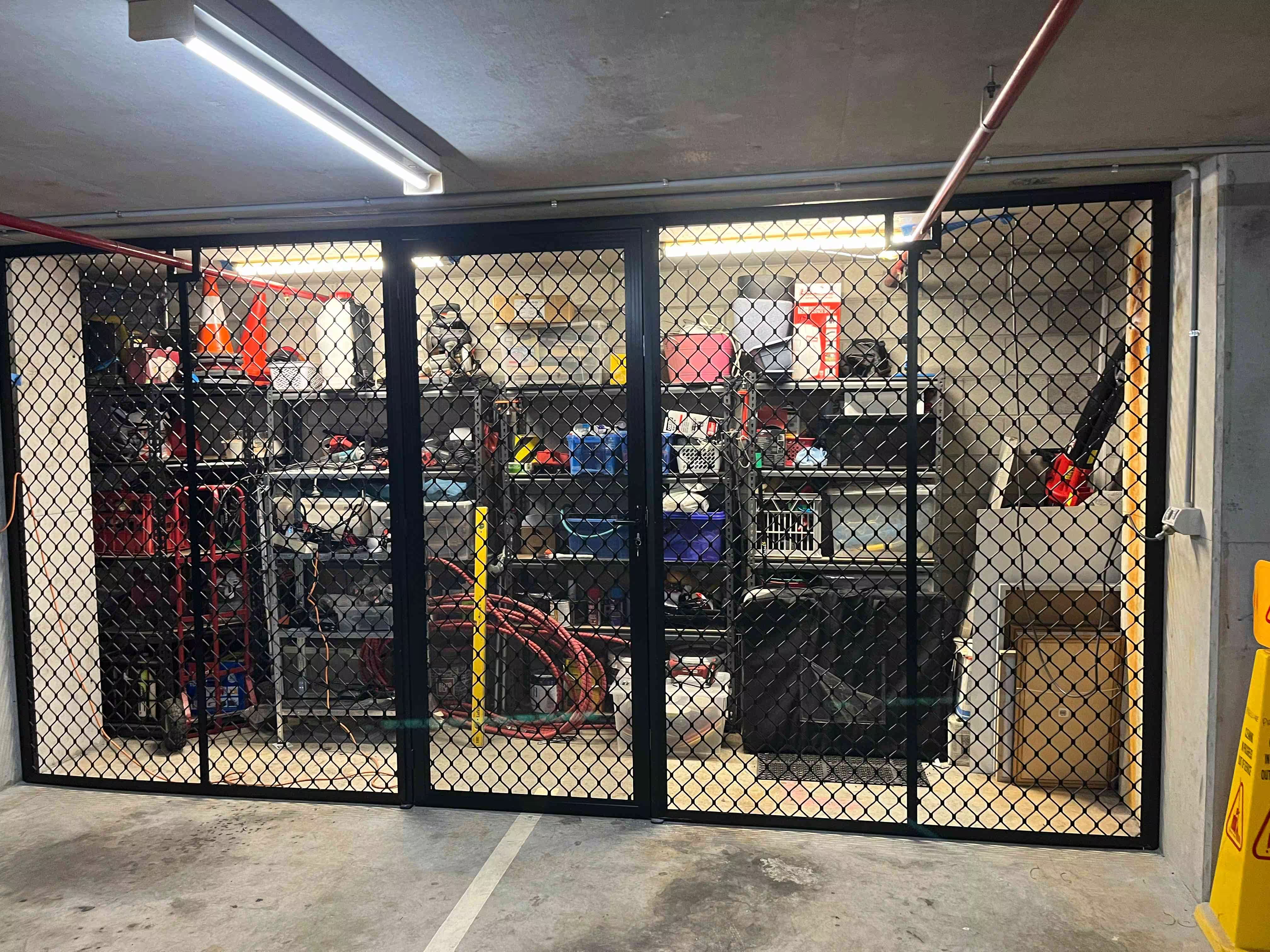
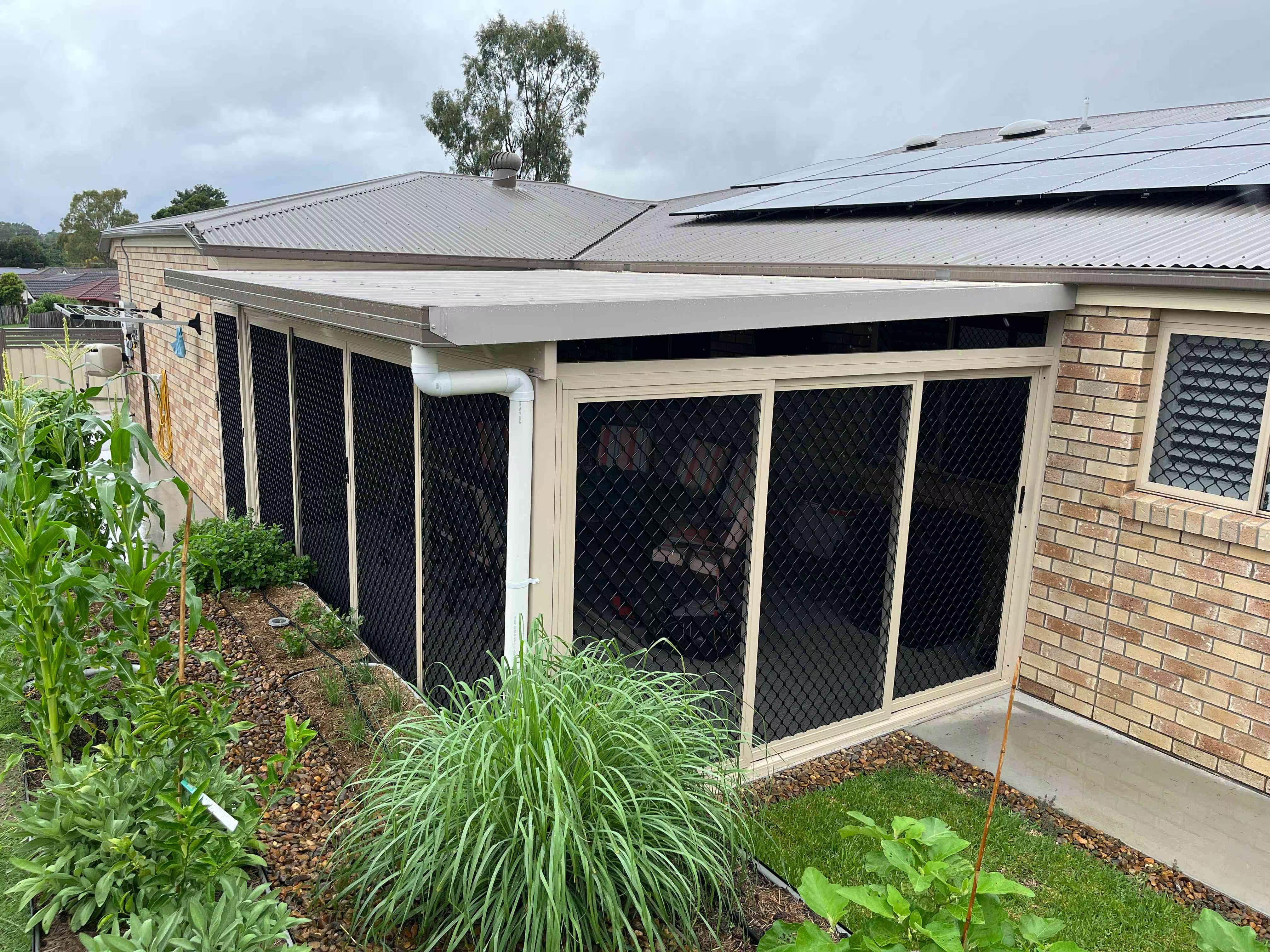
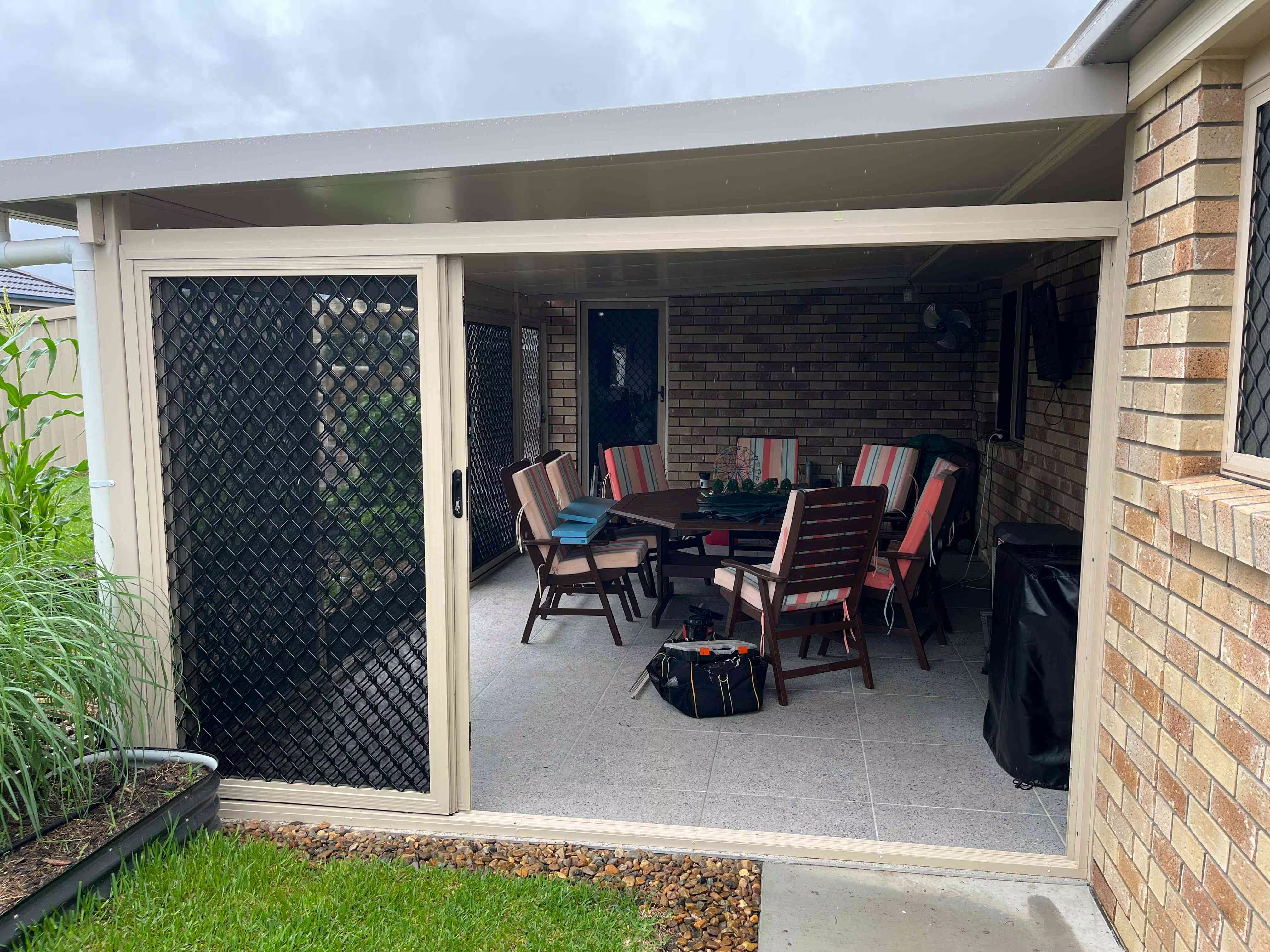
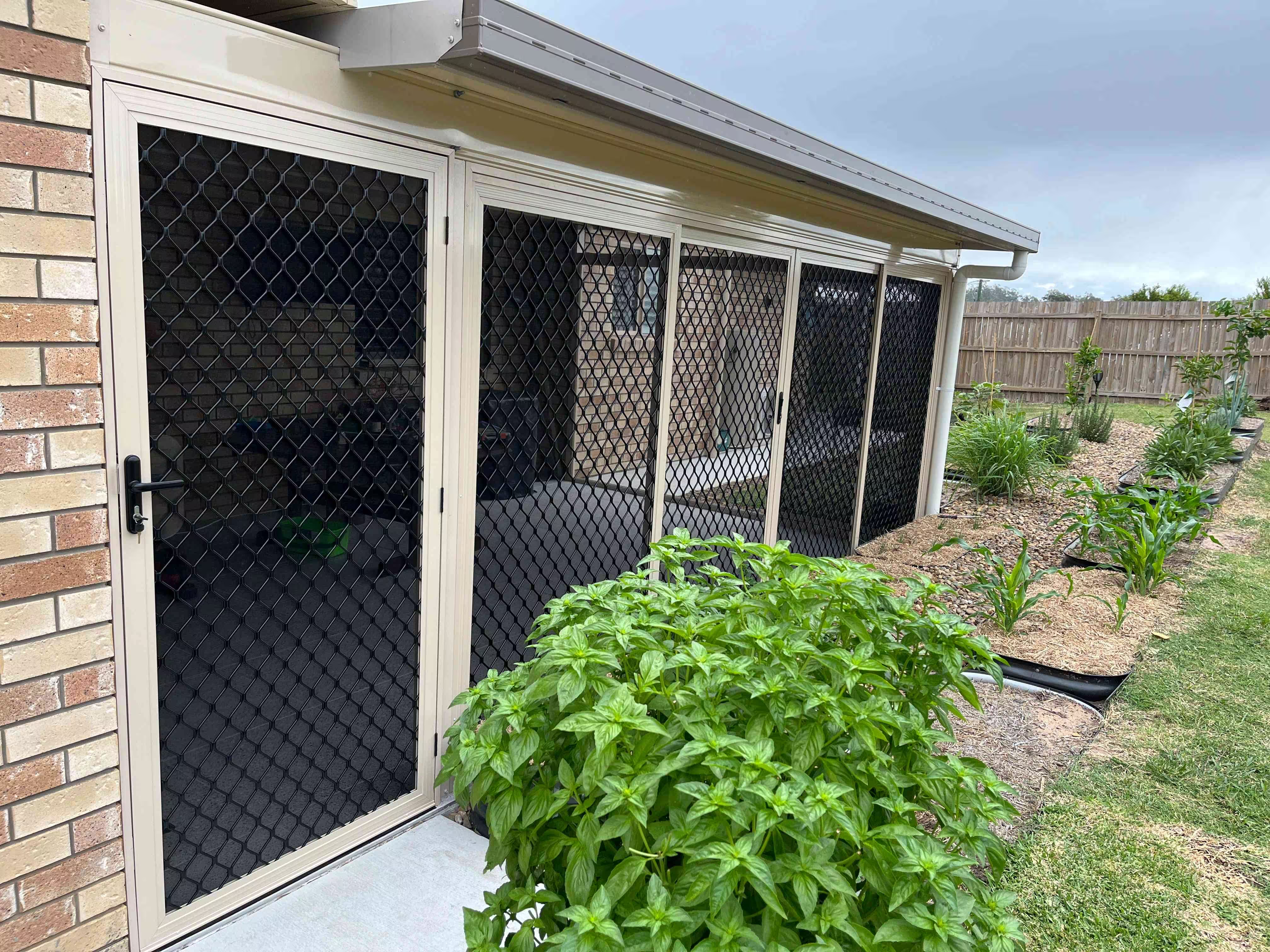
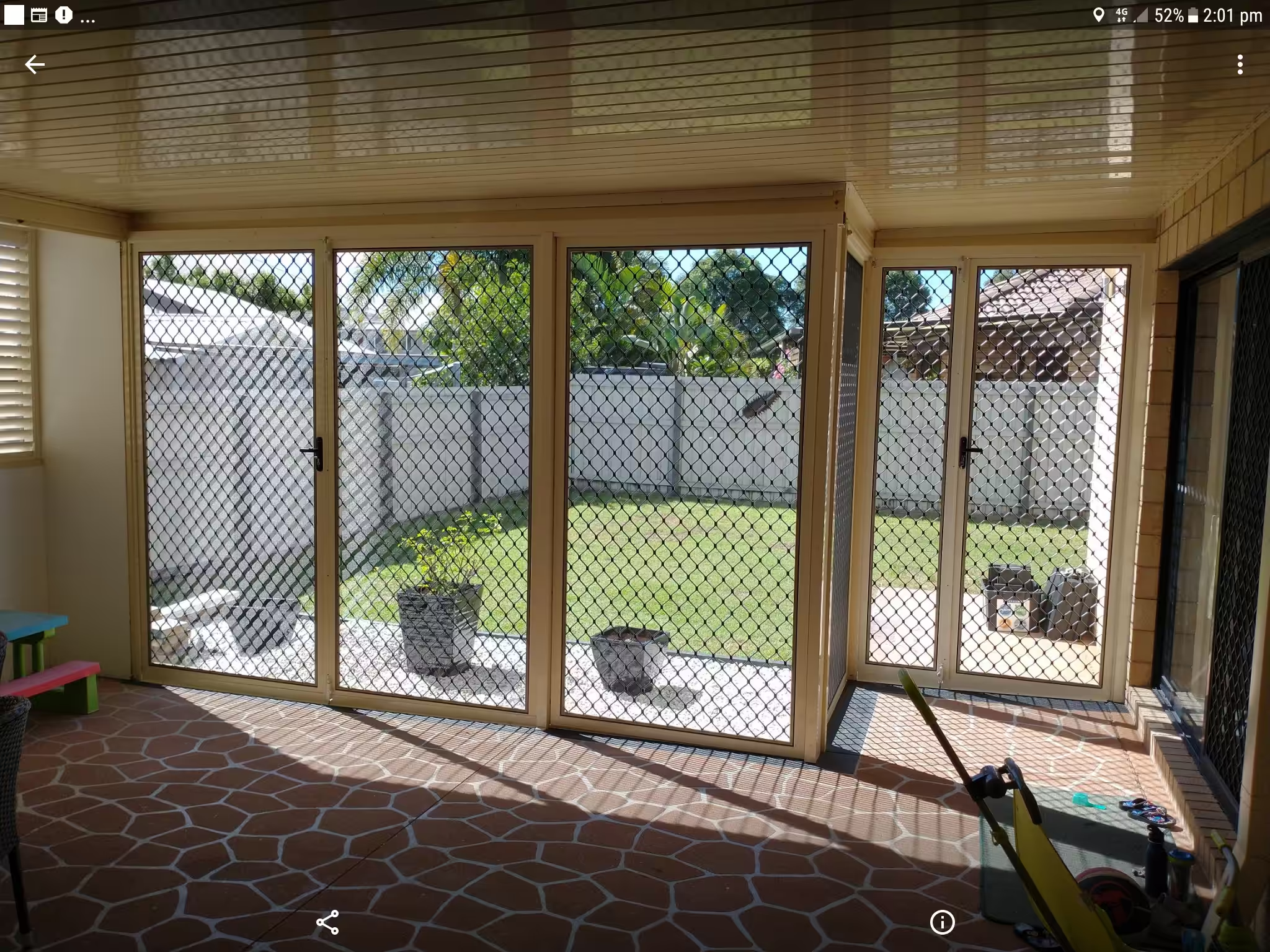
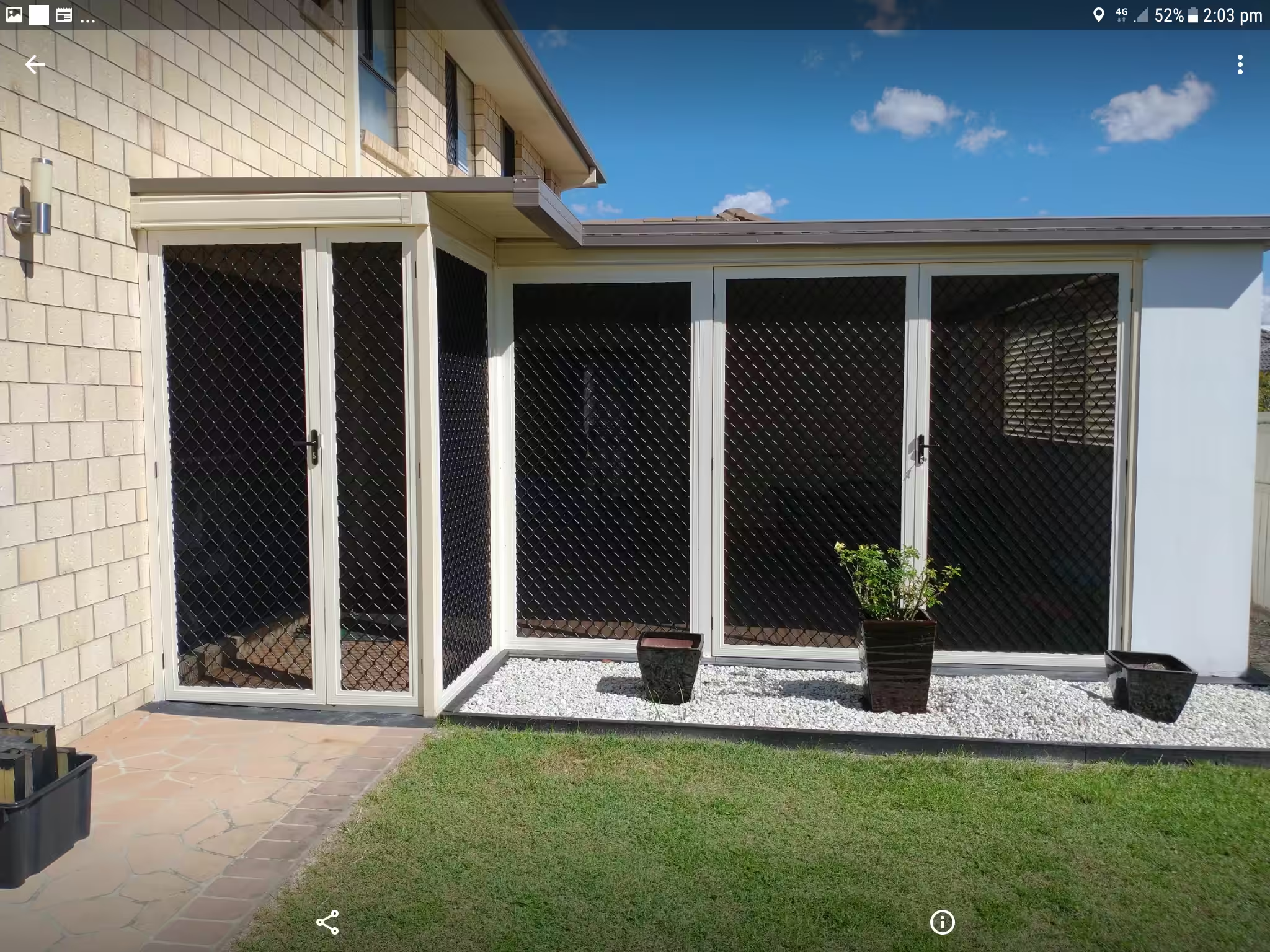
Diamond Grille is the security screen most Queenslanders picture: a tough aluminium diamond grille in a riveted frame, with insect mesh behind it. It has protected homes here for decades because it does the job without costing the earth. You get a real barrier over the window, air and light straight through it, and a look that suits an older home as easily as a new one.

Made and fitted by our own crew, here in Queensland. Measured twice.©

  • It is held everywhere, not in a few spots.

The 7mm aluminium grille is riveted into the frame at close, regular spacing, so the hold is spread right across the screen. There is no single weld to pop and no easy point to lever.


  • It breathes, and you still see out.

The open diamond pattern lets air and light straight through. Choose a black grille and it recedes as your eye adjusts, so the pattern fades and the view stays.


  • It is the sensible-money screen.

Diamond Grille gives you a genuine security screen for less than a stainless steel system. That is why it has been the default on Queensland homes for years, and why it is still the right call for plenty of windows.

What It Does

  • Window security across the home, on a budget that makes sense.
  • Fixed, sliding, double hung, awning, casement, louvre and servery windows.
  • Homes that want proven, affordable security with a classic look.
  • Insect, pet, midge and bushfire-rated mesh behind the grille, to suit the window.

What it handles

Features and Benefits

Riveted, not single-point welded. The hold is spread across the whole screen, so there is no one weak point to attack.

Aluminium, built for the climate. A powder-coated aluminium frame and grille resist corrosion through Queensland summers.

Re-meshable. The insect mesh behind the grille can be replaced down the track without a whole new screen, which stretches the life of the product.

Mesh Options

The grille is the security. The mesh behind it decides what else you keep out:

  • Standard fibreglass mesh: keeps insects out and lets the most air through.
  • Pet-resistant mesh: stands up to claws and paws.
  • Midge and sandfly mesh: a finer weave for coastal and waterside homes.
  • Aluminium or stainless steel mesh: needed for bushfire-rated screens in BAL 12.5 and BAL 19 zones.

Construction & Materials

The grille. A 7mm aluminium diamond-pattern grille, the security barrier itself. Its open diamond aperture, roughly 83mm by 69mm, is built for general security, maximum airflow, and a clear visual deterrent at the window.

The frame. Extruded, powder-coated aluminium. The grille is riveted into the frame at close, regular spacing, which is what gives the screen its strength.

The mesh. A flyscreen mesh sits behind the grille. The grille does the securing, the mesh keeps the insects out. You choose the mesh to suit the window (see Mesh Options).

The finish. Standard powder-coat colours, or custom Dulux and Interpon. Grille and frame are usually colour-matched, and a black grille is the pick where the view matters.

Limitations

Worth knowing before you choose.

It is an aluminium grille, not stainless steel mesh. Diamond Grille is a genuine security barrier, but our Clearshield perforated stainless steel screen is stronger again, and the step up where security is the first priority.

You see the grille. The diamond pattern is visible, more than a fine stainless mesh. A black grille recedes as your eye adjusts and helps a lot, but the pattern is still there. If you would rather not see the screen at all, Clearshield is the one.

It is not a privacy screen. You see out, and from up close someone can see in. Add a privacy mesh behind the grille if privacy matters.

Bushfire rating depends on the mesh. Standard fibreglass mesh is not bushfire rated. Aluminium or stainless steel mesh is required in BAL 12.5 and BAL 19 zones.

Warranty

  • Term: 7-year manufacturer warranty.
  • Covers: manufacturing defects under normal residential use.
  • Not covered: misuse, forced damage, or poor installation by others.


Keep it simple to look after. A wash-down with mild detergent and fresh water, no abrasives, and the screen holds up for years.

How We Measure

This is where Measured twice© stops being a slogan. A screen that does not fit is not securing anything. So before anything is made, one of our team comes to the house and works through what matters.

The opening, properly. We take three measurements across every opening and work to the tightest, because the grille has to sit hard against the frame on all sides.

Which windows, and how much of them. On most windows we screen the opening section, the part that can be forced or left open. The fixed pane is screened too where the window’s position calls for it.

How it will fix. Different windows and brands take different methods, worked out at the measure, not on the day.

What it has to comply with. We confirm any BAL bushfire requirement for your address before you commit.

How We Install

A screen is only as good as the way it is fixed to the house. So we fit each window the way that window needs.

The right method for the window. Depending on the window type and frame, the screen face-fixes to the surround, fits into the channel, or fits inside the reveal. We pick what suits the window, not whatever is quickest.

Fixed so it cannot be defeated. Tamper-resistant fixings into solid structure, with the gap kept tight so there is nothing for a pry bar to grab, and fitted without fouling how the window opens.

Certified, not just installed. The way a security screen is fitted is covered by AS5039.2. We fit to that standard, affix the installation compliance label, and our QBCC licence (No. 732582) stands behind the work.

Then we test it. We check the screen and any access hatch work before we leave.

Diamond Grille is designed and tested to Australian Standard AS5039, the standard for security window grilles. AS5039 puts a screen through knife shear, dynamic impact, jemmy and pull testing, so the rating is earned, not assumed. The way it is fitted is covered by AS5039, and our QBCC licence (No. 732582) stands behind the install.

Lead Time & Availability

Allow 10 to 15 working days from the day you approve your measure. Custom colours or BAL-rated mesh can add a little. We will give you a real date, not a vague one.

Reviews

There are no reviews yet.

Be the first to review “Diamond Grille Security Screens”

Your email address will not be published. Required fields are marked *

Security for every window

Not every window is a flat, fixed pane. Awning windows wind out from the bottom. Casement windows swing out on a side hinge, and hopper windows tilt inward. Louvre windows open on a stack of glass blades. Each one still has to open, lock, and work with a security screen in place, so we do not fit every window the same way. We fit the screen to suit the window in front of us, and the security goes on without taking the window’s job away.

Sliding and double hung windows

These are the most common windows, and both take a standard screen with no special access hardware. What changes is how much of the window we cover, and that comes down to how much of it opens.

Sliding windows

One panel slides and the other is fixed, so we screen the opening section, the part that can be forced or left open. The fixed pane is screened as well only where the window’s position calls for it.

Double hung windows

Both the top and bottom sash slide, so the whole window opens. We screen the entire window, because either sash could be worked from outside.

Awning and wind-out windows

An awning window is hinged at the top and winds outward from the bottom, worked by a handle at the sill. That winder has to keep turning with the security screen in place. We fit the screen inside the reveal but above the winder bar, so the screen covers the opening while the handle stays clear underneath. You wind the awning window the way you always have, fully screened.

Louvre windows

A louvre window is a stack of glass blades that wind open and pivot out past the face of the window. Fit a screen flat against the opening and the blades foul it as they turn. So we box the screen out, building the frame with depth so it sits proud of the glass. The blades open and close freely behind it, and the airflow a louvre is built for stays exactly as it was.

Casement and hopper windows

A casement window is hinged at the side and swings open like a door. A hopper window tilts inward, hinged at either the top or the bottom. Different movements, same problem: the handle, winder and lock sit right where the security screen needs to go, so a flat screen would put the hardware out of reach. We build access into the screen instead, and pick the method that suits the window.

Access 01

Flap

A hinged section of the screen you lift to reach the lock and winder, then drop back into place. It locks shut, and comes in two sizes depending on how far back the hardware sits.

Access 02

Hopper hatch

A hinged panel that swings open so you can reach in and work the lock and winder, then closes again. Simple, low-profile access for the hardware behind the screen.

Why our standard grille is black

Another advantage of riveting: because the grille is fixed in as its own part rather than fused to the frame, we can run a black grille behind any frame colour. A welded screen is coated as one piece, so the grille is stuck with the frame colour. Riveted, the two are separate, so the frame can match the house and the grille can still be black.

And black is the colour that gets out of the way. The grille is the one part of a diamond screen you actually see, and against a bright outdoor scene the eye reads straight past anything sitting in shadow. So a black grille recedes and you look through to the view, where a light or frame-matched grille catches the daylight and stands out as a lattice in front of it. It is the same reason you see out of a shaded room far better than anyone sees in.

That is why black is our standard, not an upgrade. You keep the frame colour that suits the house, and the grille that secures the window stays out of the way of the view.

The whole window, or just the opening?

On most windows we screen the opening section, because that is where break-ins happen. A burglar goes for the part that opens: the lock gets forced, the sash jemmied, or the window is simply left open. Breaking glass is loud and slow, so it is rarely the way in. Screening the opening section covers the real risk and still lets you open the window for airflow.

We extend the screen across the fixed pane when a window’s position makes a quieter glass entry realistic: a secluded or ground-floor window with fences or planting for cover, or a large pane low enough to climb straight through. Those are the windows worth covering in full.

Welded or riveted: why it matters

How the grille is held to the frame decides how the screen behaves under attack, and the two methods fail very differently.

We rivet. The grille is fixed to the frame with rivets at close, regular spacing the whole way around. The hold is shared across many independent fixings, so there is no single join to aim at. An attack has to beat them one after another, and a sudden shock load, which is exactly what a break-in delivers, cannot take them all at once. Each rivet buys time.

Welds do the opposite. They concentrate the hold in a few rigid joints, and they leave a heat-affected zone where the welding has softened the aluminium around the join. A fused joint is brittle by comparison, so under a sharp impact a weld can fail, and the failure can run through the joins beside it.

There is one place this argument is already settled. Aircraft wings are riveted, not welded. That is the highest-stakes load-bearing job there is, carrying constant shock and flex, and rivets are chosen for it for one reason: no single point of failure. If welds were the stronger answer under that kind of load, an aircraft wing is the last place anyone would cut a corner. They are riveted.

Both methods can be built to pass AS5039, so the tested barrier is covered either way. Riveting is the reason ours keeps holding once the test is over and a real attack keeps coming.

The usual knock on riveting is corrosion, from the small bare edges left where the rivet goes in. On aluminium that barely matters: it is not steel, and the metal protects its own surface. A weld that has not been cleaned and prepped properly before powder coat is itself a common place for corrosion to start. So the durability argument does not run the way it is often told.

Whatever your windows do, there is a way to secure them properly. We work out which method suits each window when we measure, so the screen protects the opening and the window still works the way it should.

Images are for illustration purposes only and may not reflect the exact product, finish, or appearance on your own home.

Why We Measure to Quote

At ONESOLOMON, we understand that precision is key when it comes to securing and enhancing your property. That’s why we take the time to accurately measure every space before providing a quote for our products. Each property is unique, and accurate measurements ensure our privacy screens, security doors, awnings, shutters, blinds and screens fit perfectly and function as intended.

Our team of experts are trained to assess the specific needs of your space, allowing us to offer customised solutions that deliver optimal performance, durability, and style. By measuring first, we guarantee that you get the perfect fit every time, with no surprises and no compromises.

01

Fill out our form

02

Lock in a time with our team

03

Get your FREE at home quote

04

We make and install!

Latest Trends

Choosing windows for a new build or renovation: a South East Queensland guide

Whether you are building new or renovating, windows are easy to choose for the wrong reasons, or to not really

We Were Picked to Show Queensland How Manufacturing Gets Done

Australian Manufacturing Week came to Brisbane for the first time in its 20-year history this May. Seven thousand industry leaders,

Security Door | ONESOLOMON

Why ‘Strength’ Is the Wrong Word When It Comes to Security Doors

The question you should be asking when you invest in a security screen isn't 'how hard can this door be
Person Preparing for Storm | ONESOLOMON

When a Storm Is Coming, Retract Your Awning. Every Time.

The number one cause of avoidable awning and outdoor blind damage isn't poor quality products, it's products being left out

Professional Installation – The Only Option for the Best Results

When it comes to securing and enhancing your property, professional installation is the only option for achieving the best results. At ONESOLOMON, our skilled installation team ensures every product is installed to the highest standard, providing you with long-lasting performance and security.

A flawless installation guarantees your security doors, screens, blinds, shutters and awnings function properly, remain durable, and look great for years to come. Trusting our professionals for installation ensures you avoid common issues such as improper fitting, reduced safety, security or effectiveness. With ONESOLOMON as your security screen, blind and awning supplier and installer, you can rest easy knowing your products are fitted with the utmost care.

Person Drilling | ONESOLOMON

You’ll Be Glad You Chose ONESOLOMON

What are you waiting for? Get a free measure and quote today. Our friendly and experienced team look forward to assisting!

Proudly Australian Made & Owned

We are committed to delivering high-quality, locally made products designed to withstand Australia’s unique climate.

High Quality, Durable Materials

Our products are built to last, offering resistance to harsh conditions, UV exposure, and everyday wear.

4b0b3eed-noun-trusted-5321470-fed03d

Experience & Trusted Specialist

With over 30 years of expertise, our team ensures precision installation and top-tier service.

We service South East QLD Including