


There’s a version of this conversation that happens all the time. A homeowner gets three quotes. Two are in a similar range. One is noticeably cheaper. The temptation to take the cheaper one is completely understandable — it’s the same product, right? Same windows. Same rooms. Same job.
Except it’s usually not the same product, the same materials, the same installation, or the same outcome. And by the time the difference becomes obvious — eighteen months in, or three years in, or when the mechanism fails and you can’t find anyone to fix it — the saving has long since been spent on something else.
This isn’t an argument that expensive is always better. It’s an argument that price is a poor proxy for value, and that in an industry where products are fixed to your home and expected to last a decade or more, the true cost of a purchase becomes clear over time rather than at the point of transaction.
The Wrong Question and the Right One
Most people buying blinds, shutters, awnings, or security screens ask: ‘What’s the price?’ That’s a reasonable starting point. But the more useful question is: ‘What’s the cost per year of service?’
A roller blind that costs $280 and lasts four years before the fabric fades, the mechanism seizes, and the chain snaps has cost you $70 per year. A roller blind that costs $420 and is still operating cleanly at year ten has cost you $42 per year — and it’s still going.
The cheapest product to buy is almost never the cheapest product to own. What matters is cost per year of reliable service — and that number only becomes visible long after the quote is signed.
This framing matters particularly for products that are difficult or expensive to replace. A blind in an accessible bedroom is relatively easy to swap out if it fails. A set of plantation shutters fitted across a large living space, or security screens on every opening of a home, represent a significant reinstallation effort. Getting it wrong the first time isn’t just a financial inconvenience. It’s a disruption to the home and, in the case of security products, a potential lapse in protection.
Where the Money Actually Comes Out
When a quote comes in substantially below the market, something is different. The question is where. Here are the most common places budget is cut — and what each one means in practice.
Materials grade.
The single largest driver of product longevity is material quality, and it’s also where the least visible savings are made. A powder-coated aluminium frame using a quality pre-treatment process will hold its finish for fifteen years in a Brisbane environment. One using a cheaper coating system will begin to chalk, fade, or pit within three to five years, particularly on west-facing elevations or within a kilometre of the coast.
Fabric blinds are similar. The difference between a solution-dyed acrylic and a cheaper polyester fabric isn’t visible on day one. It’s visible at year three, when the polyester has lost its colour and the acrylic still looks the same as when it was installed.
These material differences rarely appear on a quote. They’re in the specification, not the line item. A quote that says ‘roller blind’ tells you nothing about what the blind is actually made of.
Component quality.
The mechanisms, tracks, chains, springs, and hardware that make products function are a significant part of the total cost — and a common place to economise. A quality spring system in a retractable fly screen will operate smoothly through ten thousand cycles. A budget spring will start to stiffen and skip within a year of regular use.
Lock cylinders, hinge grades, chain loops, winding mechanisms — each of these has a commercial specification and a budget specification, and the difference in unit cost is small. Multiplied across every product in a home, however, it represents a meaningful saving to the supplier — and a meaningful difference to how long everything works.
Accuracy of measure.
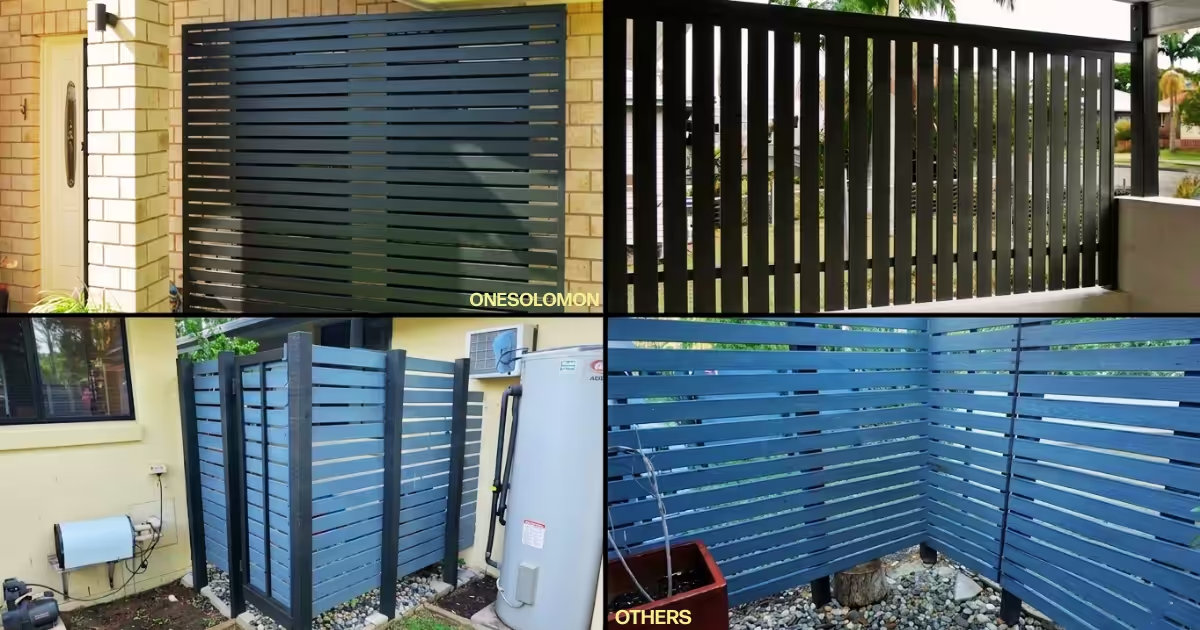
Cheap installations frequently skimp on the measure. A single site visit with a tape measure, dimensions noted on a phone, no laser, no checking twice. The product is ordered to those dimensions and arrives to find it doesn’t fit cleanly — gaps at the edges, fabric that doesn’t hang right, a frame that’s slightly proud of the reveal.
At ONESOLOMON, every installation is check-measured before manufacturing begins. Not because we think our salespeople are incompetent — but because homes are not built to perfect tolerances, and the gap between a good fit and a poor one is often a matter of millimetres. That check measure costs time. It’s also why our products fit the way they do.
Installation quality.
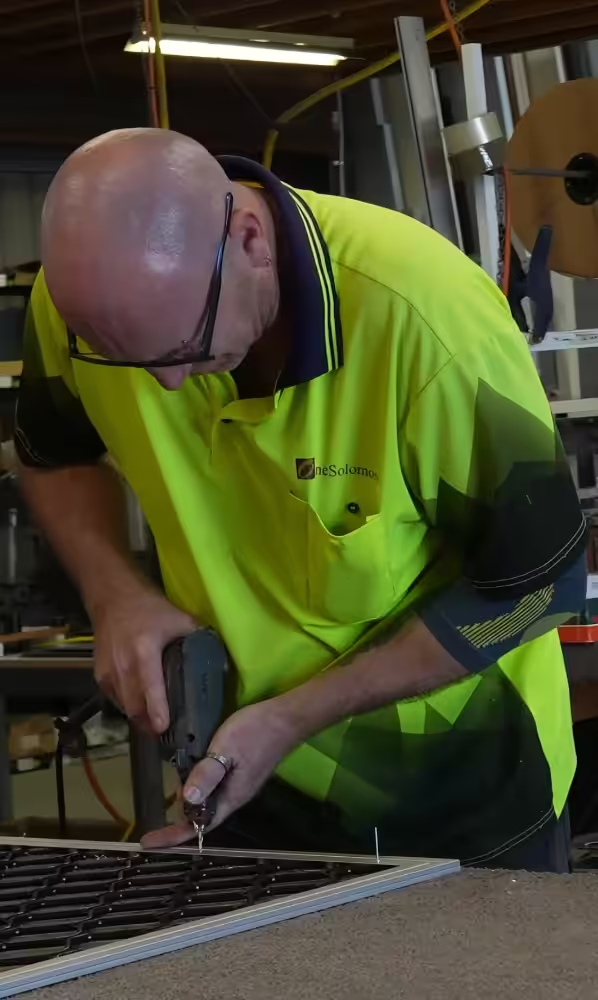
The labour component of a window furnishing or security screen job is not a commodity. The difference between a careful, experienced installer and one working under time pressure to make a low-margin job profitable is visible in the outcome — in how cleanly a frame sits in a reveal, how precisely a security screen aligns with the door it’s fitted to, how confidently a mechanism operates on first use.
Low quotes frequently involve lower labour rates, faster turnaround times, or subcontracted labour that isn’t directly accountable to the supplier. These arrangements can produce fine results. They can also produce results where no one is clearly responsible for fixing what goes wrong.
Queensland Makes Everything Harder
This matters more in South East Queensland than in most places. The combination of intense UV radiation, high summer humidity, coastal salt air, and temperature extremes that can push aluminium frames through significant thermal expansion cycles is genuinely brutal on building products.
A powder-coated finish that would last twenty years in Melbourne may begin to show stress in Brisbane within five, if the coating specification isn’t appropriate for the climate. A mechanism designed for an indoor environment will deteriorate far faster on a north-facing or coastal elevation than in the controlled conditions of a showroom.
South East Queensland is one of the harshest environments in Australia for building products. Products that aren’t specifically designed and finished for this climate will underperform — often visibly and early.
This is one of the reasons local manufacturing matters more than it might seem. A company making products in Brisbane, with a team that installs them in Brisbane homes every day, develops an understanding of what works and what doesn’t in these specific conditions. A product designed and manufactured for a temperate southern climate and distributed nationally may be perfectly adequate in Canberra. In Redcliffe, it may not last.
The Warranty Is Only Worth What’s Behind It
Almost every window furnishing and security product on the market comes with a warranty. Five years, ten years, fifteen years — the numbers are printed in the brochure and repeated by the salesperson. What they rarely explain is what the warranty actually covers, what it excludes, and — most importantly — who is going to be around to honour it.
What most warranties actually cover.
Read the fine print of most window furnishing warranties and you’ll find coverage that’s narrower than the headline suggests. Manufacturing defects are covered. Degradation from UV, humidity, or normal use often isn’t. Products installed in the wrong environment — outside the manufacturer’s specified conditions — frequently aren’t. And anything that requires the owner to have maintained the product to a specific schedule (which most warranties do) is conditional on that maintenance having actually occurred and being demonstrable.
Who’s going to honour it.
This is the question that nobody asks until they need to. A ten-year warranty from a company that closes, changes hands, or exits your market in year four is a ten-year warranty that provides three years of protection. It is not an unusual outcome. The window furnishing and home security space has significant churn at the lower end of the market — businesses that operate on tight margins, compete aggressively on price, and don’t always survive the economic conditions that follow.
A warranty from a business that has been operating in the same market continuously since 1987, with a local factory, a permanent team, and a track record of standing behind their work, is a fundamentally different instrument from a warranty offered by a business that started trading three years ago.
What ‘warranty service’ actually involves.
requires someone to come to your home, assess the problem, source the part or replacement, and fix it. For national distributors of imported products, this can involve long lead times for parts, service bookings weeks out, and technicians who aren’t familiar with the specific installation.
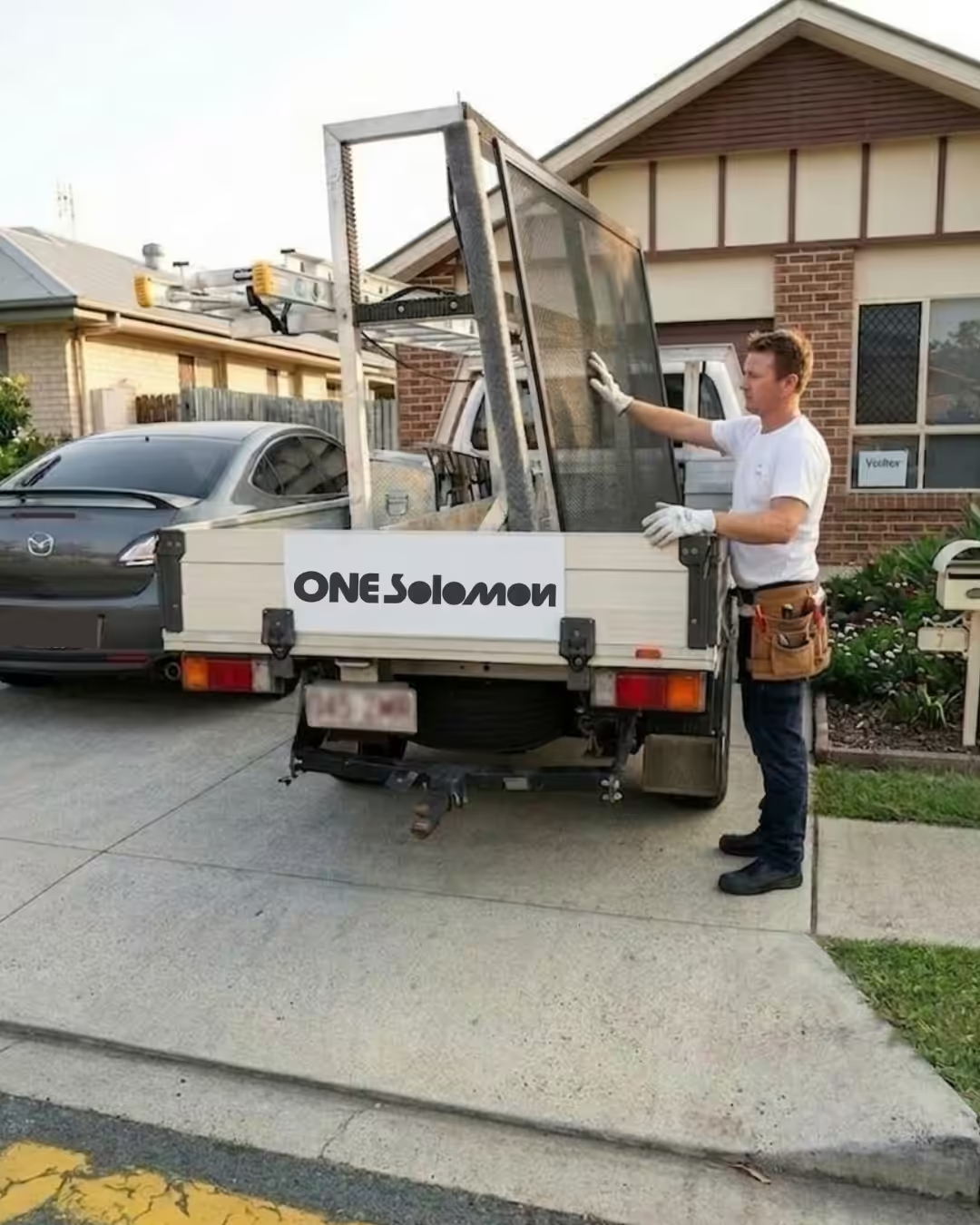
For a local manufacturer whose team installed your products in the first place, warranty service is a van, a phone call, and someone who knows exactly what they put in and how.
The Hidden Cost of Replacing Things
<Here’s the maths that rarely appears in a quote comparison. Suppose you’re fitting out a full home — blinds to every window, security screens on the main openings, shutters in the living areas. One quote comes in 25% lower than another. That’s a meaningful saving on a large job.
Now suppose the cheaper products begin to fail at year five — mechanisms seizing, fabric degrading, screens that need replacing. The cost to remediate includes not just the replacement products, but the labour to remove the old ones, patch or repaint any fixings, and reinstall the new ones. On a full home, that labour cost alone can represent a significant proportion of the original installation cost.
Meanwhile, the higher-quality installation is still in perfect working order, covered by an active warranty, and showing no signs of needing attention.
The 25% saving on day one has, in this scenario, become a net loss by year eight. This is not a hypothetical. It’s a pattern that experienced property managers, builders, and anyone who has owned several homes for long enough will recognise immediately.
How Property Investors Think About This (and What Homeowners Can Learn)
Experienced property investors tend to be unusually clear-eyed about the cheap-vs-quality question, because they run the numbers across multiple properties and see the patterns play out repeatedly
The calculation they apply is simple: what is the total cost of this product over the expected tenancy period, including replacement, repair, and the vacancy cost of anything that fails and needs to be fixed before a property can be re-let? When those numbers are on the table, the cheapest upfront option rarely wins.
The other factor investors weight heavily is tenant durability. A product that handles daily heavy use — blind cords pulled hard, security screens knocked against, shutters operated without care — needs to be built to a commercial standard even in a residential application. Budget products simply don’t have the hardware specifications to handle it. They get replaced, repeatedly, at the investor’s expense.
‘Every dollar spent on a rental property must either increase rent, reduce vacancy, or extend asset life.’ When a product fails and a property sits vacant while it’s being fixed, the cost of the cheap choice becomes very clear, very fast.
The same logic applies to homeowners, even if the emotional calculus is slightly different. You live in the house. You notice the blind that’s stiff every morning. You see the colour shift in the fabric that was once a deliberate choice. You feel the security screen door that doesn’t close cleanly. These aren’t just financial costs. They’re daily friction — small, persistent reminders of a decision that prioritised upfront price over long-term quality.
To Be Fair: Where Cheaper Options Make Sense
This isn’t a case for always buying the most expensive option. That would be as poor an argument as always buying the cheapest. There are places where a budget product is entirely appropriate, and understanding where those are is part of making good decisions.
- Low-traffic locations: A basic roller blind in an infrequently used spare bedroom will outlast the same product in a main living area by years, simply because it’s used less. Specification to the context makes sense.
- Short-horizon properties: If you’re preparing an investment property for sale in twelve months, a five-year product lifespan may be entirely adequate. The question is always time horizon, not quality in the abstract.
- Budget constraints that are real: Sometimes the money genuinely isn’t there for the premium option on everything. In that case, the smart approach is to prioritise — put the quality product on the high-use, high-visibility, high-security openings, and accept a more modest specification on less critical windows.
What isn’t sensible is choosing a cheaper option for an important application on the assumption that it will perform the same. It won’t. The price difference exists because something is different — and the question is always whether that difference matters for your specific situation.
What to Actually Compare When You’re Getting Quotes
When you’re comparing quotes for window furnishings, awnings, shutters, or security screens, here are the questions worth asking alongside the price:
- What are the specific materials? Not just ‘aluminium frame’ — what grade, what coating system, what pre-treatment process?
- What does the warranty actually cover — and what does it exclude? Ask for the warranty document, not just the headline term.
- How long has the company been operating in this market, and do they manufacture locally?
- Who does the installation — direct employees or subcontractors — and how is quality controlled?
- Is there a check-measure before manufacturing, or does the initial measure go straight to production?
- If something needs fixing in year three, what does the service process look like? Who comes, how quickly, and where do the parts come from?
These questions tend to produce more useful information than a price comparison. They also tend to make clear, quite quickly, why quotes from different suppliers come in at different levels.
At ONESOLOMON, we’ve been doing this in Queensland since 1987. We manufacture locally, measure twice on every job, and stand behind what we install. We’re not the cheapest option on every quote. We are reliably one of the most cost-effective when measured over the life of the products — which is the only timeframe that actually matters.